(Spanish version of this post available here.)
Welcome, readers! Before we begin: there won’t be a bi-monthly summary today, as you already know From Now, Forever has been published and I don’t have much else to share. News about the projects I have started working on will have to wait until my chaotic life settles down. I’ll tell you all about it at the end of September!
In the summary at the end of June, I mentioned that I had visited Pompeii and that I would write a post about it once I’d processed my thoughts on that trip. That was much longer ago than I intended, but the book’s publishing consumed my life ever since. Now that that is done, let’s talk about Pompeii.
Disclaimer: There won’t be pictures of the dead bodies at Pompeii here. If you want to know why, I made this post on Reddit right after this trip explaining my feelings about it (it also doesn’t contain any photos). That account is personal, not professional, so follow it at your discretion, I can be very silly.
Note: all the photos in this post are mine.

(This is what remains of the Temple of Apollo with Mount Vesuvius in the background.)
This trip came about because of an Andrea Bocelli concert held in the Roman amphitheatre within the ruins. Hearing his beautiful voice there, and a choir singing O Fortuna with Vesuvius looming behind, was an extraordinary experience, but I’m not here to talk about that.
I reached the ancient city after taking two trains and travelling for nearly four hours (and risking my life in the delirium that is Neapolitan traffic. Honestly, Naples, you need to discover what traffic lights are). Since it was the end of June, Apollo reigned over both sky and earth, so I slathered myself with sunscreen, put on my hat, forgot my water bottle in the hotel fridge, and set off towards the ruins.
Pompeii is famous for its end, for the day it was frozen in time. We all know of the eruption of Vesuvius, of the people immortalised in their final moments, of the destruction, the metres of ash, of death. But only people that have visited seem to know what the city truly offers us today: life.

When you walk through the ruins of Pompeii, you feel the life of the people who once made their homes there. Their houses still have their murals, their gardens are green, the water fountains along the main street still serve passers-by.
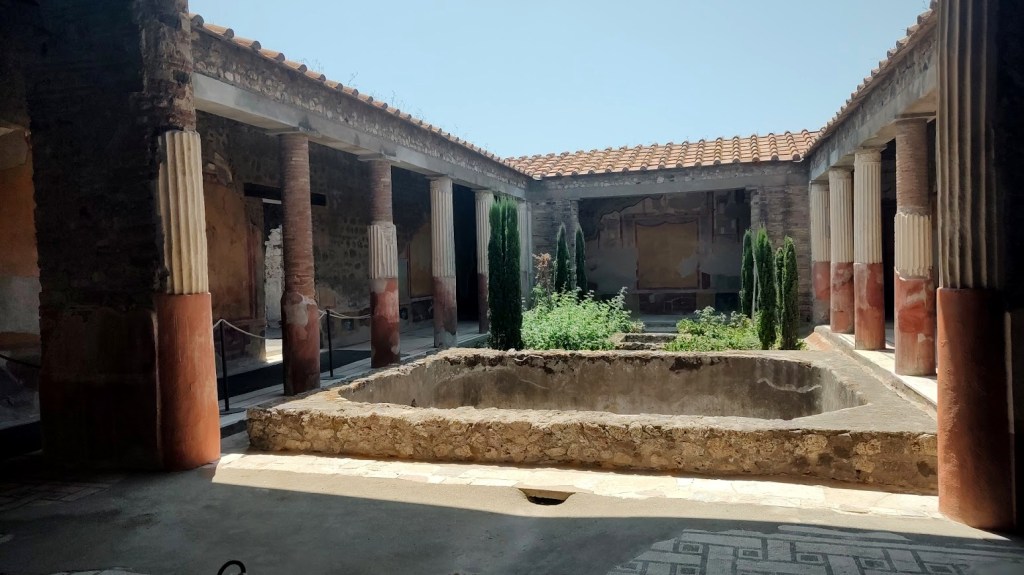
The houses have pools to collect rainwater, which then irrigated their orchards and gardens. They have mosaics warning of dogs protecting their owners or signs welcoming visitors. There are multiple public baths offering both hot and cold water, there are thermal baths, there’s a brothel with multiple beds. The main street is lined with restaurants that open onto it, with colourful counters, clay ovens and murals showing the specialities of the place (the brothel does this too, though its pictures do not depict food).
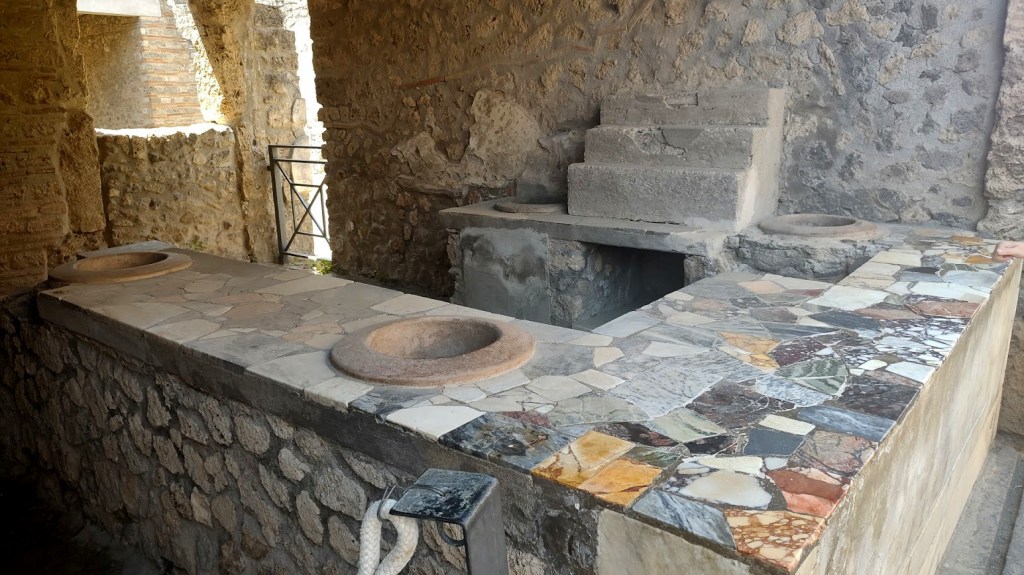
Walking through the city, you don’t see its death, you feel its life. It is as if the Pompeians had left just an hour or two ago, perhaps their day interrupted by some celebration outside the city, or by a decision to escape the summer heat and head to the river (which was much closer in their time), but their return feels imminent and inevitable.
Their houses are waiting for them, their shops must open again. At sunset, the city will once more fill with the clamour of locals and move again, hopefully towards a gentler future.
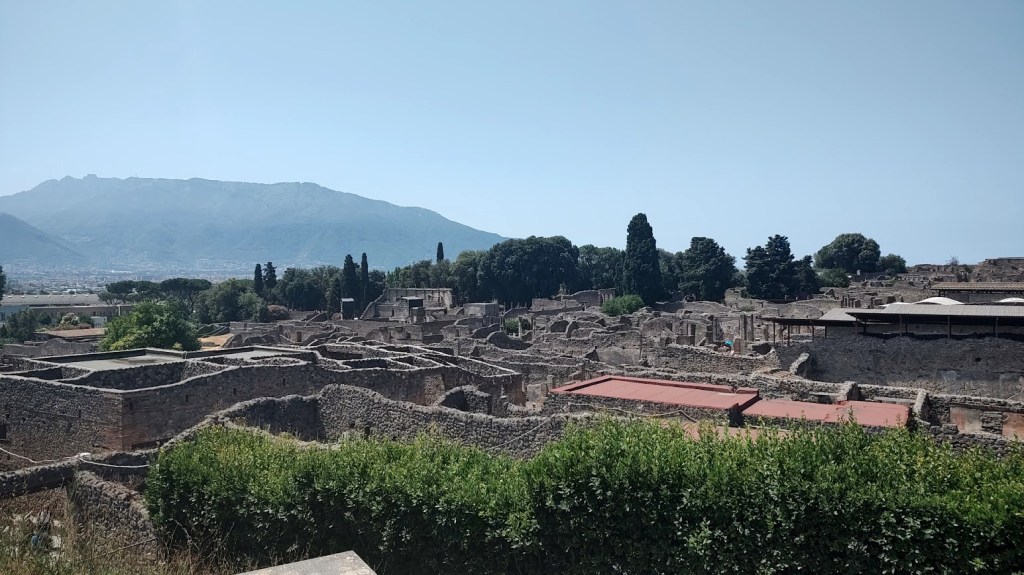
We know Pompeii because of its dead, but it was not death that I found there, and I don’t think the last day of its history should define it, not when what the volcano did was not destroy it, but immortalise it. Nowhere else can you see how people lived, feel what their routines were like, cross paths with their spirits at the doors of their houses, their baths, their temples.
Pompeii, despite everything, lives.
 B. Sylphaen